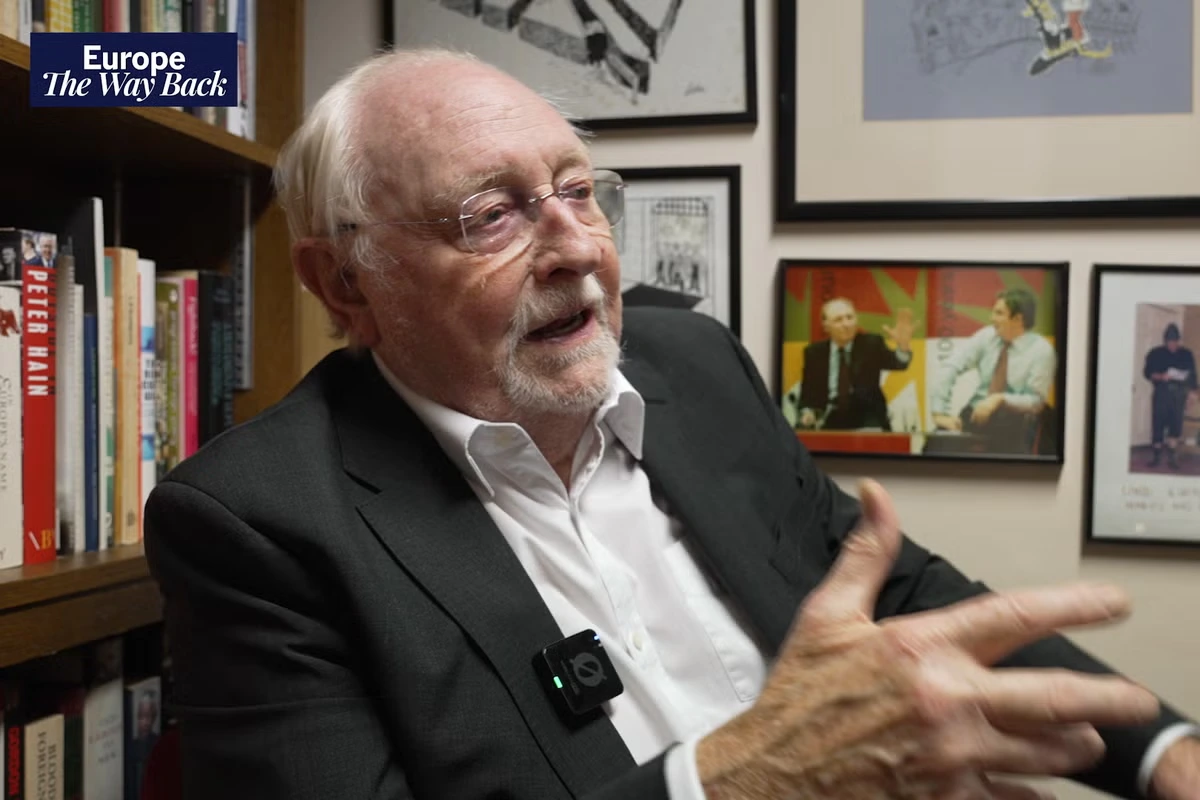
Neil Kinnock, who was one of the leading lights of the “No” campaign in the 1975 referendum on Britain’s membership of the European community, made history by persuading the Labour Party of the opposite case when he became leader.
Since then, he and his party have become more steadfast in their belief that membership of what is now the European Union is in the British national interest.
Which means that he is the ideal person to comment on the paradox of a Labour government – “a Labour government,” as he might say – standing firm against any attempt to revisit the issue that was decided in the second referendum 10 years ago last month.
“The only patriotic thing to do is to get us back into the European Union,” he tells The Independent in an exclusive interview. “It’s as raw and as basic as that.” The economic case for membership is irresistible, and the benefits of sovereignty remain largely notional. As Lord Kinnock points out, Nigel Farage has not extolled them for some years now.
With a deft aside aimed at those who seek to associate the Union flag with independence from the EU, Kinnock says: “If you love your country, and the people who live under the flag – and not just saluting the flag – then you will want to get us back into the European Union.”
He argues that a referendum mandate does not last: “A one-off referendum, with a yes-no question, might legitimately represent the view of a generation or a given population on a given day. The view could have changed a fortnight later – certainly 10 years later.”
And he makes the point that the electorate has changed. “Do it for the kids. They didn’t get a chance to have a say,” he says.
Yet he understands politics well enough to know that simply reversing the 2016 vote in a third referendum is not straightforward. He has a feel for the rhythm of history, the culture of the Labour Party and the politics of the possible.
He knows that if Britain rejoined, it would be rejoining a different union, on different terms. He knows that other forms of association might be possible.
He knows, too, why Sir Keir Starmer felt bound by what he calls the “so-called red lines” – the undertaking in Labour’s manifesto two years ago to rule out not just rejoining the EU, but rejoining the single market, or allowing free movement of people, or negotiating a customs union with the EU.
These pledges were necessary, even though, in Kinnock’s words, they “invited difficulty”. But he says that Britain is “now moving into a different phase” of its relationship with the EU.
He is right, and The Independent’s campaign, Europe: The Way Back, is careful to respect the constraints of manifesto promises and the more intangible requirement to respect the outcome of a democratic decision of the British people – however arbitrary it may seem to those who disagreed with it.
We are campaigning to rebuild Britain's relationship with Europe. Join us here
But that referendum need not stand forever, just as the 1975 one did not. Meanwhile, Britain and the EU are both changing. The relationship will be renegotiated at the forthcoming summit, which is likely now to take place with a new prime minister.
The summit will put the seal on several changes that will allow a closer relationship without crossing the red lines, but the change of prime minister inevitably casts the future relationship in a different light. As Kinnock says, “maybe Andy will have a different perspective”. The new prime minister, who has recently said that he hopes Britain will rejoin in his lifetime, may “not feel himself quite as constrained”, as Kinnock goes on to say.
A new prime minister also focuses attention, which was already turning that way, to what position the Labour Party should adopt in its next manifesto.
Kinnock makes a compelling case that it should be as open as possible to greater unity with the rest of Europe.
Join the community
Sign up to our free Europe: The Way Back newsletter here
What you will get by joining:
There are even more benefits if you subscribe for just £1 for seven months: